No products in the cart.

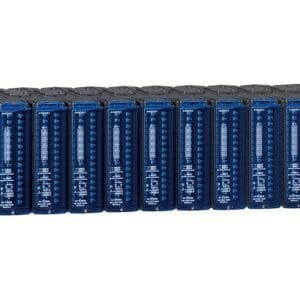
Description

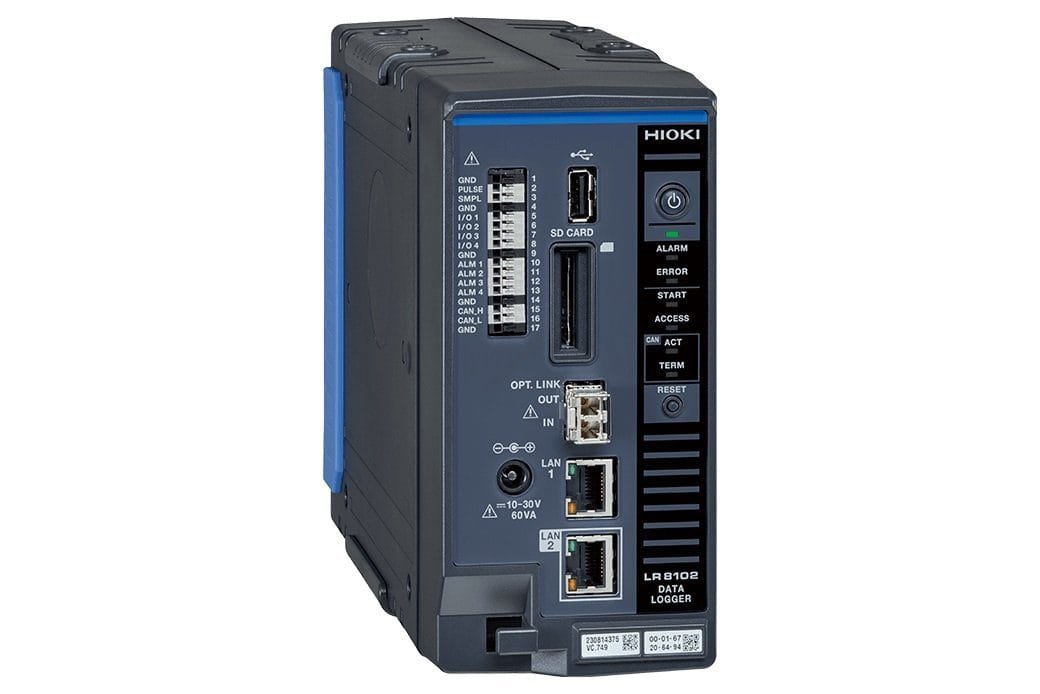
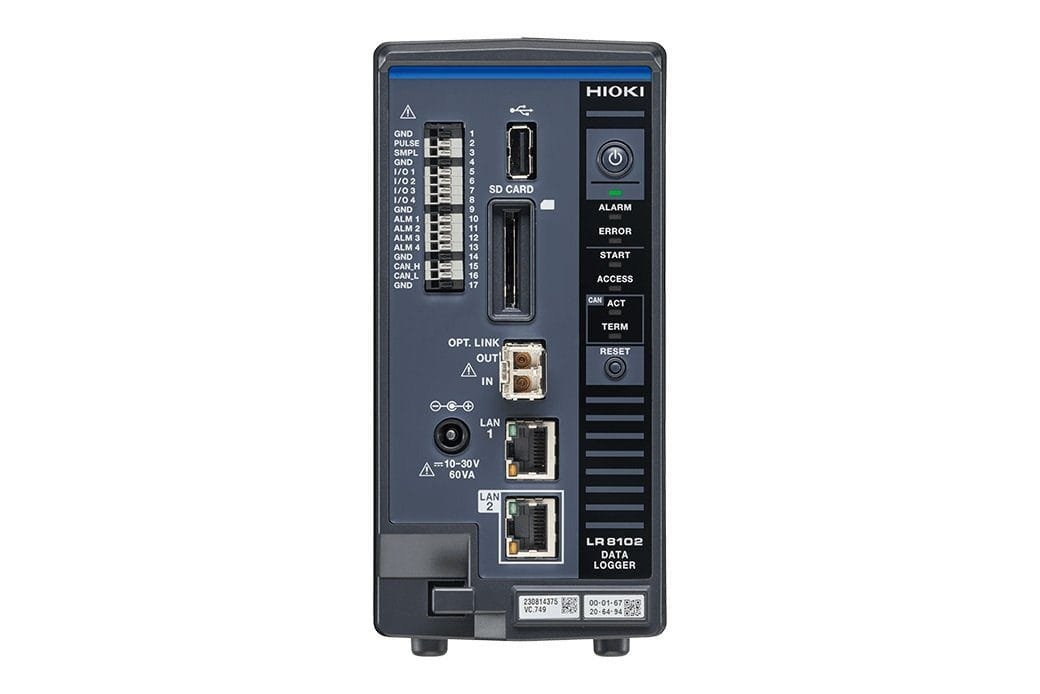
Hioki LR8102
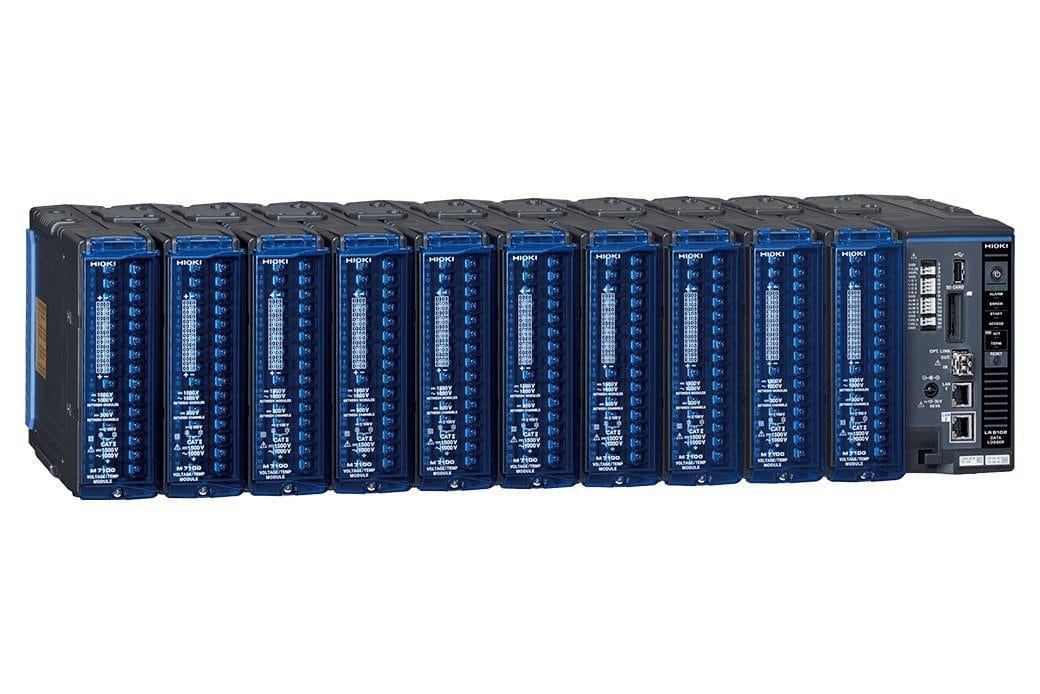
- Connect up to 10 measurement modules
- Control the instrument and transfer data using communication commands
- HIL (Hardware-in-the-loop) support with a data output interval as short as 5 ms (model dependent)
- *** This product does not include an AC adapter; AC Adapter Z1016 or Power Cable L1012 must be purchased separately ***
- *** At least one measurement module is required for this product to function; see parts M7100 and M7200 below ***
Modular Data Logger (Advanced Model)
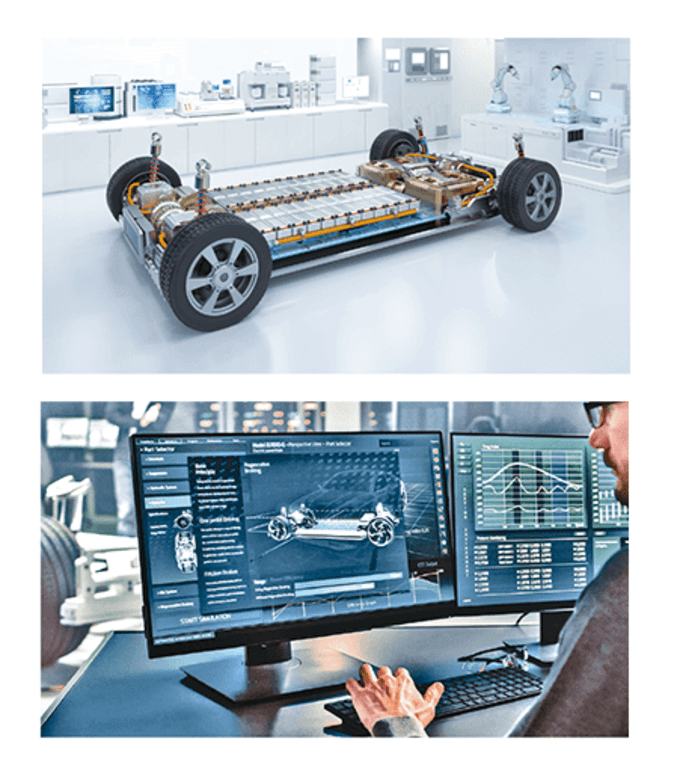
Battery packs consist of many cells connected in series. Since variability in cell characteristics can lead to a decline in the battery pack’s overall performance, it’s critically important to ascertain voltage and temperature behavior at the cell level.
Manufacturers are designing batteries of increasingly high voltage for use in electric vehicles (EVs). As battery voltages rise from 400 V to 800 V, it becomes harder to measure battery cells’ voltage and temperature safely. Instruments used to conduct charge/discharge testing of these high-voltage battery packs must now have higher terminal-to-ground and module-to-module voltage then before.
This product needs to be coupled with measurement modules to connect to devices under test.
Two Versions Available
See the table below for a comparison of the differences between the LR8101 and LR8102 loggers. The added features of the LR8102 allow for faster logging and more measurement channels.
| LR8101 | LR8102 | |
| Synchronizable Loggers | No | Yes (10) |
| LAN Ports | 1 | 2 |
| UDP Output | No | Yes |
| CAN Data Output | No | Yes |
| Measurable Channels | 300 | 3000 |
Faster Communication and Synchronizable Loggers
The LR8102 is an advanced version of the LR8101 data logger. It contains all the same features in addition to the items shown below.
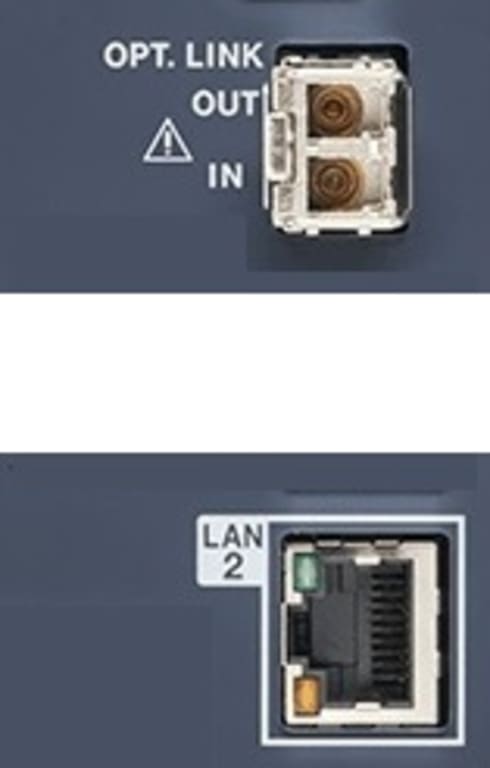
- Ability to synchronize loggers via optical link connections (See top image on the left)
- Can synchronize up to 10 loggers
- Increases maximum number measurable channels from 300 to 3,000
- Second LAN port with XCP (UDP) on Ethernet (See bottom image on the left)
- CAN interface control
- Data output refresh interval as short as 5 ms via UDP, CAN, or CAN FD
Voltage and Temperature Measurement Modules
Modules are required to connect the data logger to the device under test. The loggers can be combined with measurement modules to easily expand the number of input channels to a maximum of 300 channels for the LR8101 and 3,000 channels for the LR8202. Modules are sold separately. Their capabilities are described below.
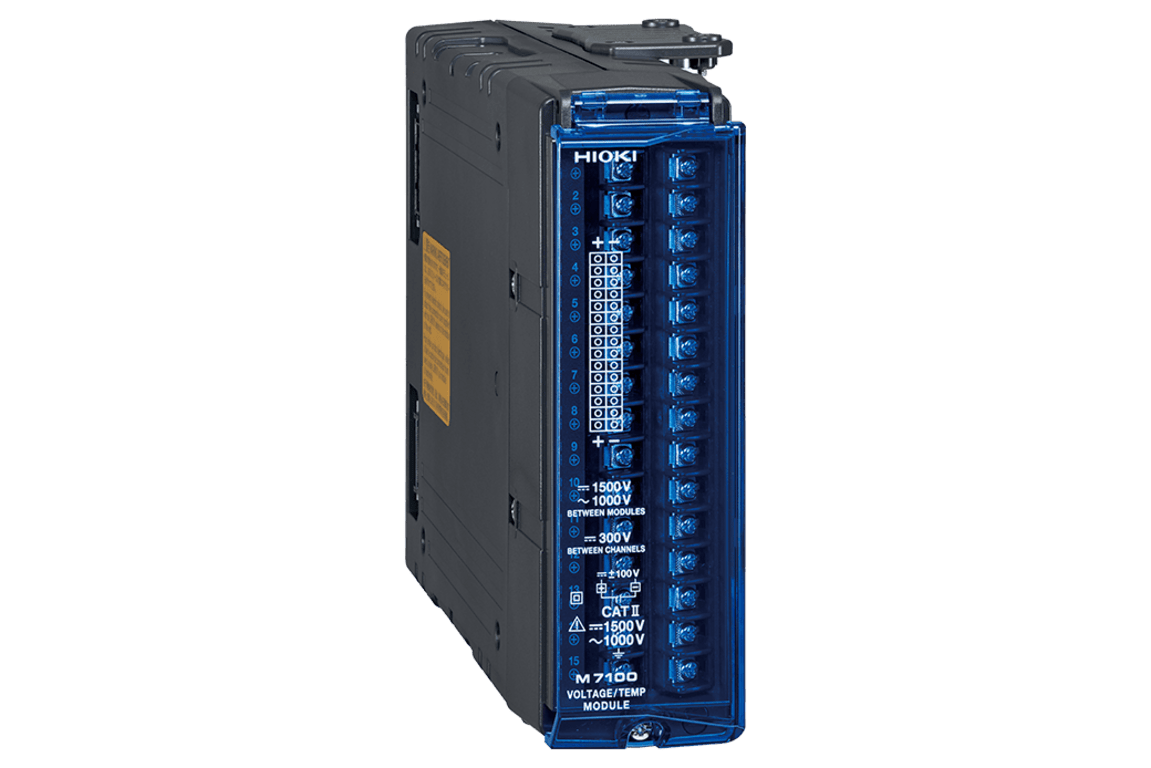
M7100
- 15 channels (voltage/temperature)
- 300 V DC insulation between channels
- 1500 V DC/1000 V AC (CAT II) between terminals and earth
- 1500 V DC/1000 V AC between modules
- 5 ms sample rate voltage (when using 1 ch to 8 ch)
- 10 ms sample rate temperature
- 10 ms to 10 s sample rate (when using 9 ch to 15 ch)
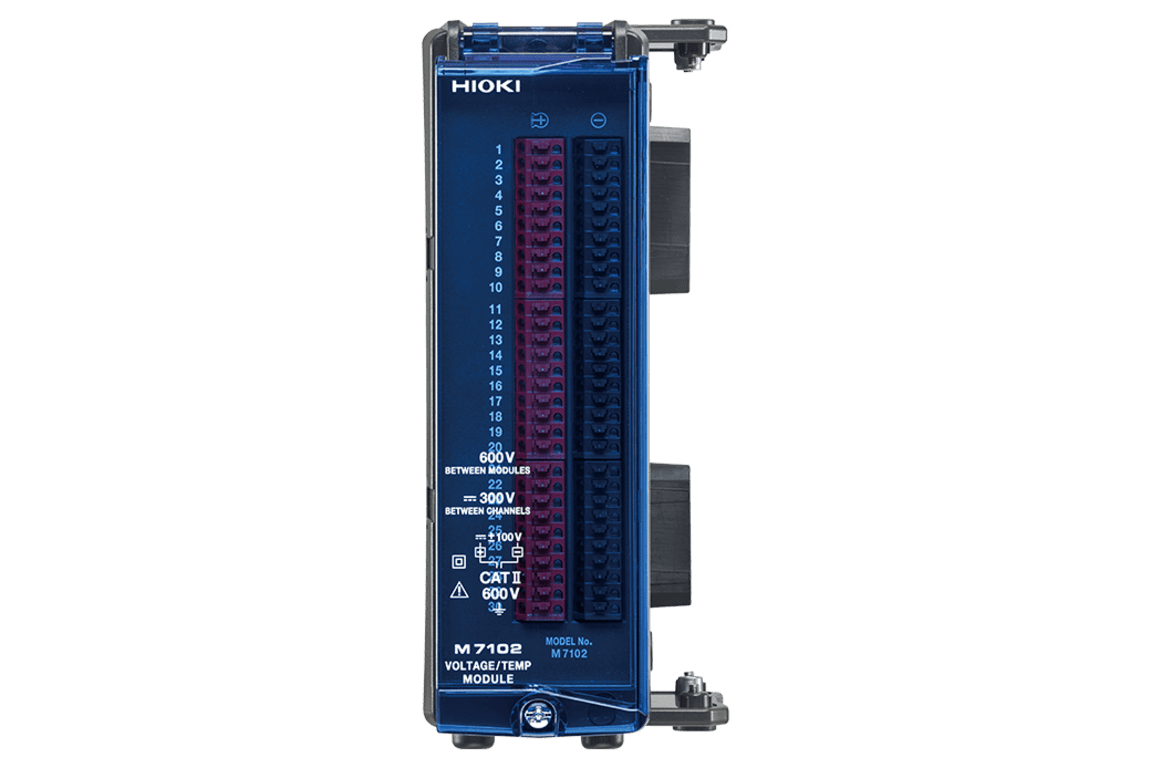
M7200
- 30 channels (voltage/temperature)
- 300 V DC insulation between channels:
- 600 V DC/600 V AC (CAT II) between terminals and earth
- 600 V DC/600 V AC between modules:
- 10 ms sample rate (when using 1 ch to 15 ch)
- 20 ms to 10 s sample rate (when using 16 ch to 30 ch)
Expand Capabilities by Adding Multiple Modules
Although the voltage of individual cells in a battery pack is low at about 4 V, measuring cell voltages in an 800 V battery pack, for example, requires an instrument with a maximum terminal-to-earth rated voltage of 800 V DC or greater. An 800 V battery pack consists of about 200 cells that are connected in series. About 400 channels are needed to measure all cells’ voltage and temperature.
Additional modules may be added as the need to test more cells arises. Modules are sold separately.

HIL Interoperability
Hardware-in-the-loop (HIL) simulation systems are used during the verification stage of electric vehicle (EV) development. Advanced verification processes of battery packs combine actual batteries with simulation technology. These tests are done in situations such as verifying/monitoring individual cells in the battery pack without a battery management system (BMS) or verifying charge/discharge control while simulating an EV driving environment. Such verification setups require measurement data of specifying individual cells’ voltage and temperature to be sent in real time to the simulation system.
The faster communication capabilities of the LR8102 makes it an excellent choice for HIL systems.
Output Voltage and Temperature Data in Real Time During Testing
To capture measured data with a battery control simulation system, it’s necessary to output data to the system at high speed. Ordinarily, communications commands are used to send data from data loggers to such systems. The speed at which data can be captured using text commands is limited to a cycle that ranges from tens of milliseconds to several hundred milliseconds.
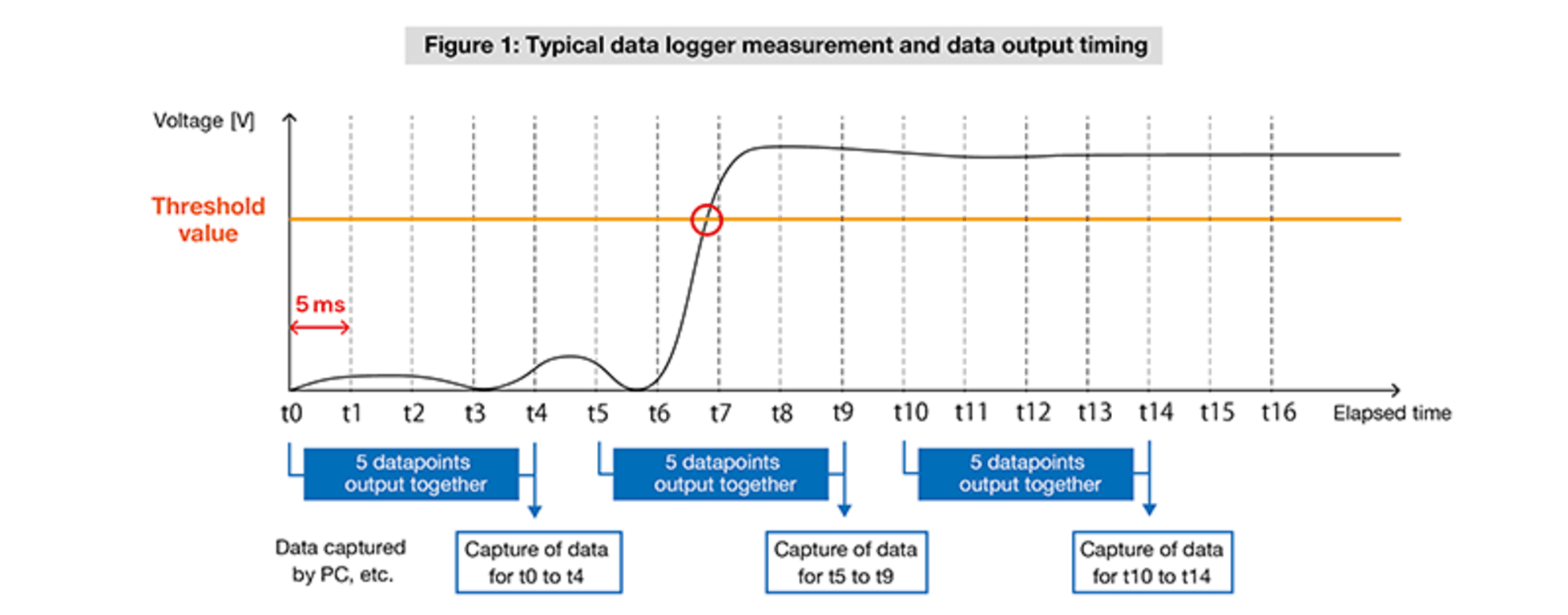
An example of measurement and data output timing using a typical data logger. Although the voltage value exceeds the threshold by t7, that data cannot be acquired until t9.
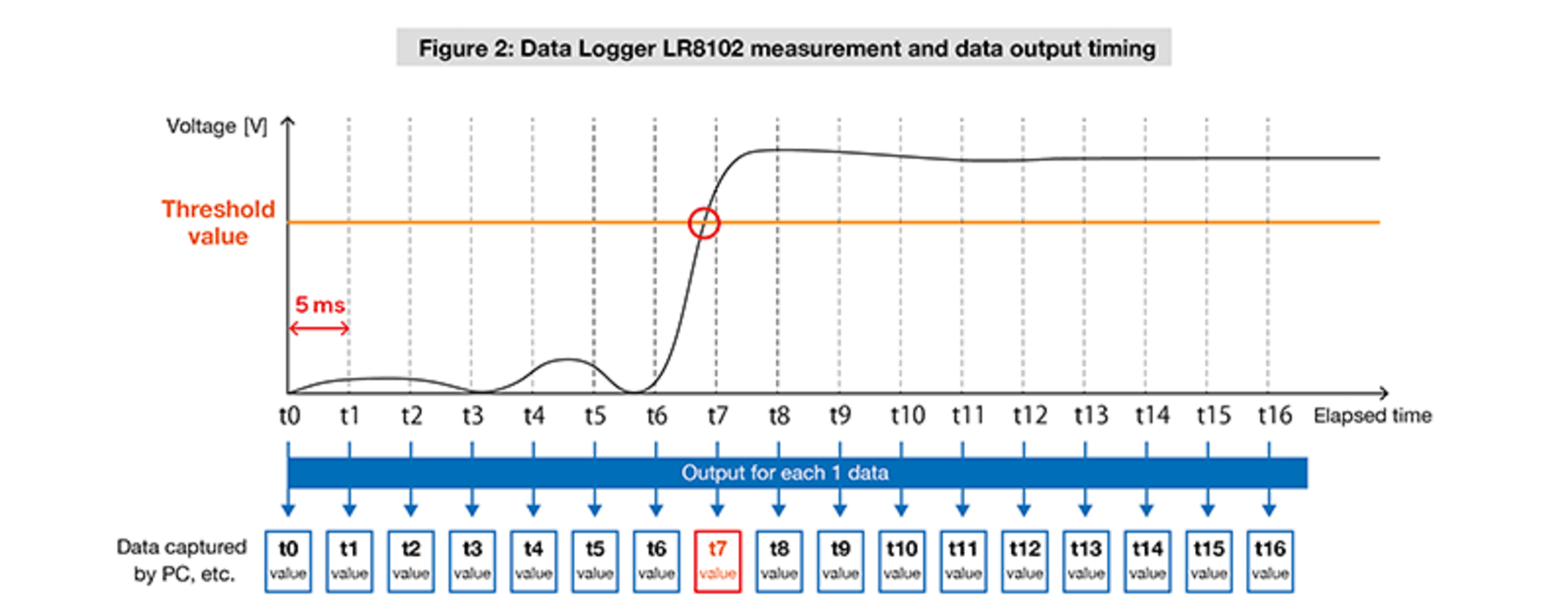
The timing at which data for measurements made with the Data Logger LR8102 are output. The LR8102 uses the UDP communications protocol, allowing it to output data at high speed. Measurement data is output one datapoint at a time, allowing all data to be analyzed in real time. Even data for t7, when the threshold value was exceeded, can be acquired immediately.
Dataloggers / Data Acquisition/Voltage Datalogger Template | |
|---|---|
| Max Voltage | 1500 V |
| Power Source | AC Line |
| LCD Screen | No |
Product General Attributes | |
| Warranty | 3 YEARS |
| Interfaces I/O | LAN / Ethernet, USB |
| Storage | SD Card |
| Power Supply Voltage | 120V 50/60 Hz |
You must be logged in to post a review.
Related products
Sale

Keithley 3706A Six-Slot System Switch with High Performance DMM
Original price was: $5,841.00.$5,731.00Current price is: $5,731.00. Add to cart


Sale

TPI 597C1 Digital Hygrometer/Psychrometer
Original price was: $262.84.$241.81Current price is: $241.81. Add to cart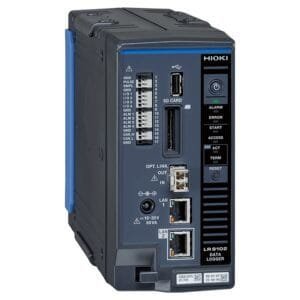 Hioki LR8102 – Modular D...
 $4,400.00
Our team of knowledgeable professionals is here to help you make informed decisions. Whether you need product recommendations, technical support, or guidance on your purchase, we're just a click away.
Contact Us Now:
📧 sales@nestesinstruments.com
📞 +1 (833) 763-7837
Let us assist you in finding the perfect solution!
Contact Us Now:
📧 sales@nestesinstruments.com
📞 +1 (833) 763-7837
Let us assist you in finding the perfect solution!
Reviews
There are no reviews yet.