No products in the cart.


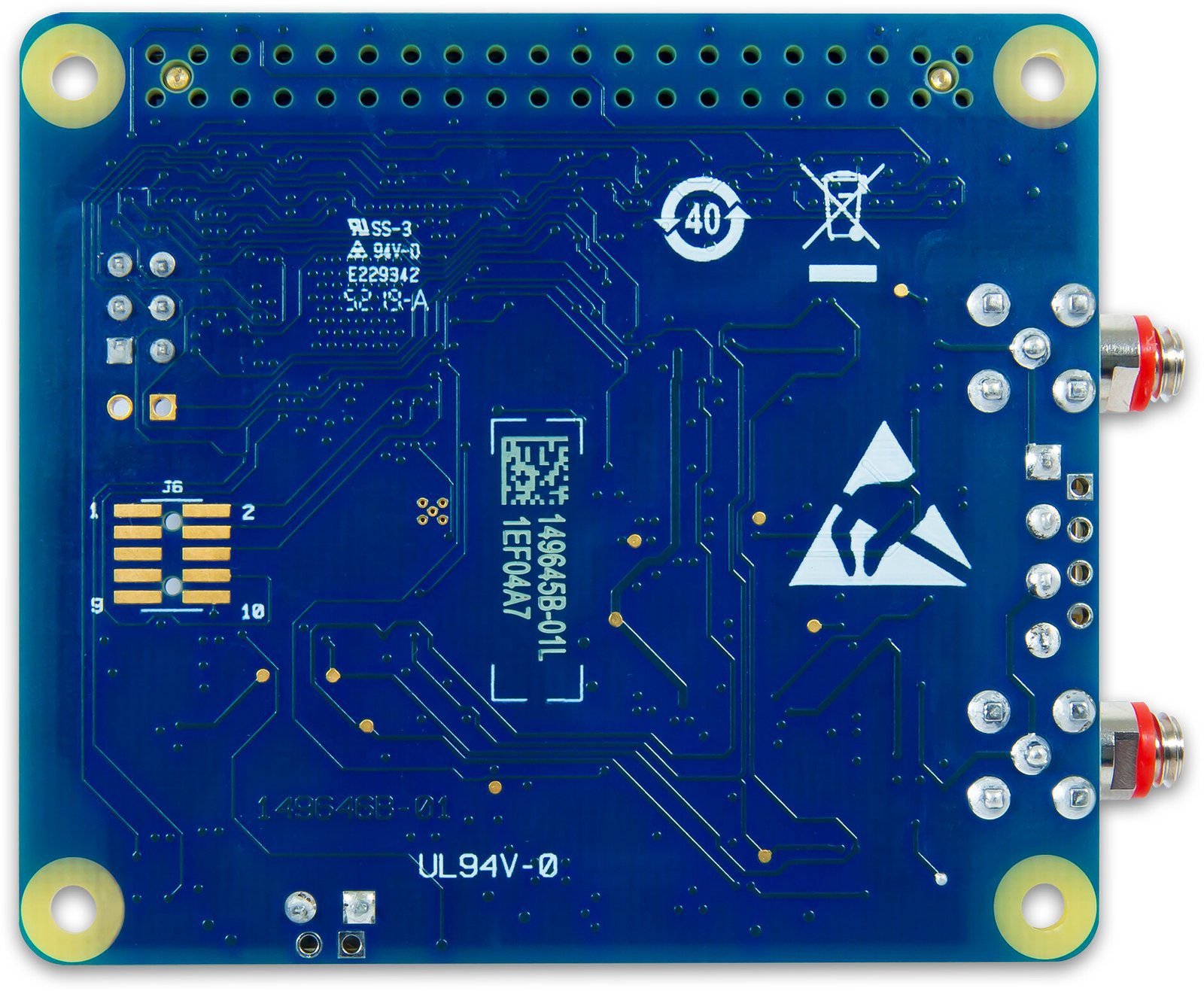
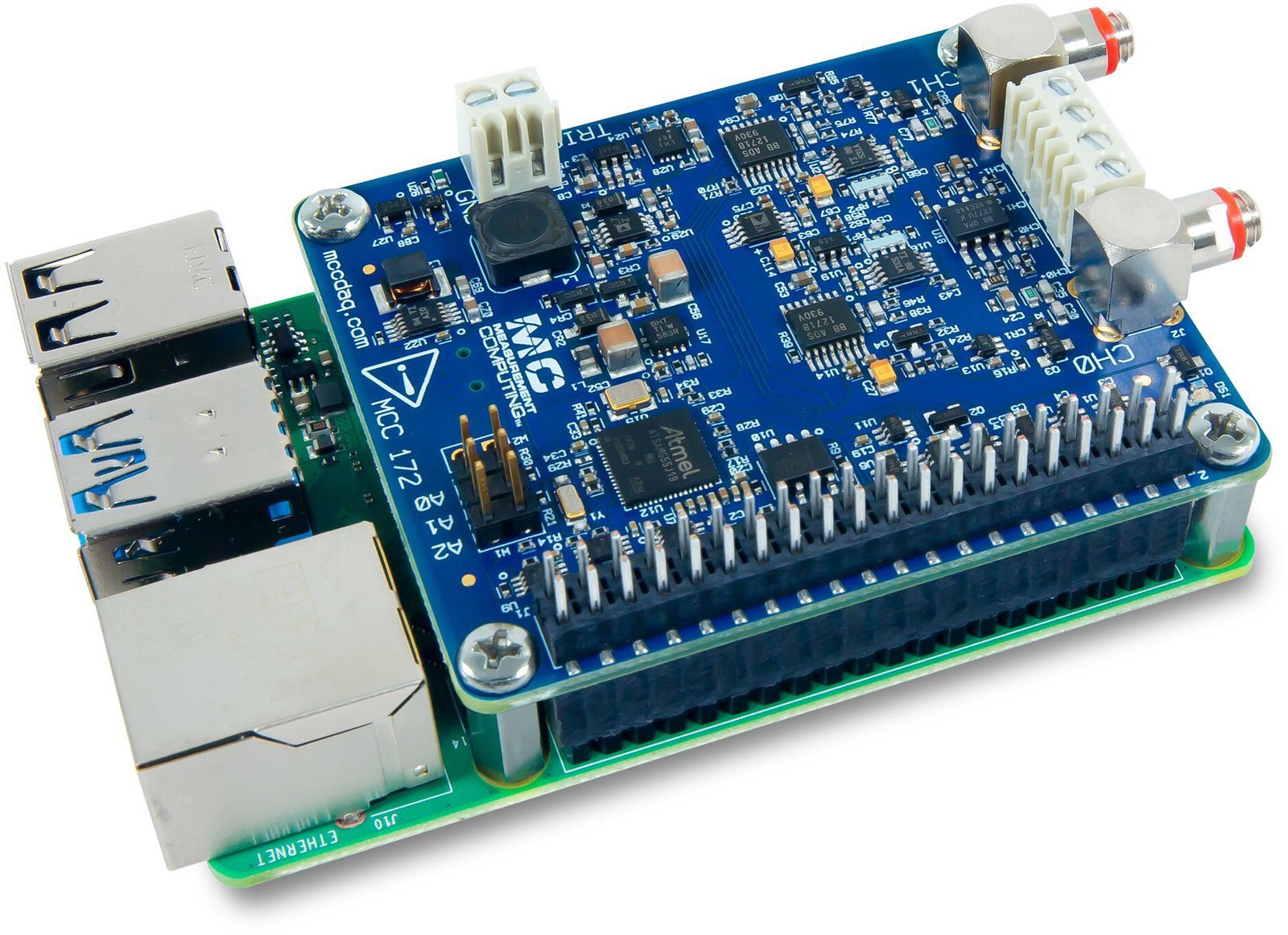


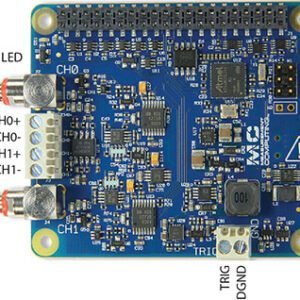
Description

Digilent MCC 172 w/ cables
- Comes with two coaxial cables
- Two IEPE inputs
- Two 24-bit, 51.2 kS/s A/D converters (one per channel)
- AC coupled at ±5 V
- 10-32 and screw terminal connections for OEM support
24-Bit IEPE Measurement DAQ HAT w/ 2 Coaxial Cables for Raspberry Pi
The Measurement Computing MCC 172 is a voltage HAT (Hardware Attached on Top) designed for use with Raspberry Pi®. The MCC 172 features two channels for making sound and vibration measurements from IEPE sensors like accelerometers and microphones. The two 24-bit differential analog input channels simultaneously acquire data at rates up to 51.2 kS/s. Users can turn the IEPE excitation current on or off. Each channel has a dedicated A/D converter. Both ADCs share the same clock and are synchronized to start conversions at the same time for synchronous data. Multiple MCC 172 HATs can be synchronized to a single sampling clock. The clock is programmable for sampling rates between 51.2 kS/s to 200 S/s. The trigger input (terminal TRIG) is used to delay an input scan until a specified condition is met at the trigger input.
HAT configuration parameters are stored in an onboard EEPROM that allows the Raspberry Pi to automatically set up the GPIO pins when the HAT is connected. The open-source MCC DAQ HAT Library of commands in C/C++ and Python allows users to develop applications on the Raspberry Pi using Linux. The MCC DAQ HAT Library supports operation with multiple MCC DAQ HATs running concurrently. Console-based and user interface (UI) example programs are available for each API.
Board components
10-32 Coaxial Connectors
- CH0 and CH1 (CHx): Analog input connectors (do not connect an input source to the 10-32 connectors and screw terminals at the same time).

Screw Terminals
- CH0+/CH0- and CH1+/CH1- (CHx+/CHx-): Analog input terminals (do not connect an input source to the 10-32 connectors and screw terminals at the same time).
- Trigger (TRIG): External digital trigger input terminal. The trigger mode is software configurable for edge or level sensitive, rising or falling edge, high or low level.
- DGND (GND): Digital ground for the trigger terminal.
Address Jumpers
- A0 to A2: Used to identify each HAT when multiple boards are connected. The first HAT connected to the Raspberry Pi must be at address 0 (no jumper). Install jumpers on each additional connected board to set the desired address.
Status LED
The LED turns on when the board is connected to a Raspberry Pi with external power applied and flashes when communicating with the board. The LED may be blinked by the user.
Header Connector
The board header is used to connect with the Raspberry Pi.

Functional Details
ADC Clock
The ADCs on a board share the same clock and are synchronized to start conversions at the same time for synchronous data. The clock and synchronized signals may also be shared across the Raspberry Pi GPIO header to synchronize multiple MCC 172s. The clock is programmable for various sampling rates between 51.2 kS/s and 200 S/s.
Trigger
The trigger input (terminal TRIG) is used to hold off the beginning of an analog input scan until the desired condition is met at the trigger input. The trigger input signal may be a 3.3V or 5V TTL or CMOS logic signal. The input condition may be a rising edge, falling edge, high level, or low level. The trigger may also be shared across the Raspberry Pi GPIO header to synchronize multiple MCC 172s.
Due to the nature of the filtering in the A/D converters, there is an input delay of 39 samples, so the data coming from the converters at any time is delayed by 39 samples from the current time. This is most noticeable when using a trigger – there will be approximately 39 samples prior to the trigger event in the captured data.
Alias Rejection
At low sampling rates, certain high-frequency signals (at multiples of 128 * the sampling rate) can fall below the cutoff frequency of the fixed analog anti-aliasing filter and create aliasing in the data. Using transducers with a bandwidth lower than 100 kHz should not affect measurement results. Sampling at 10.24 kHz or higher will also ensure that the anti-aliasing filter suppresses all signals that could alias into the data.
Firmware Updates
Use the firmware update tool to update the firmware on your MCC 172 board(s). The “0” in the example below is the board address. Repeat the command for each MCC 172 address in your board stack. This example demonstrates how to update the firmware on the MCC 172 that is installed at address 0: mcc172_firmware_update 0 ~/daqhats/tools/MCC_172.fw
Dataloggers / Data Acquisition/Voltage Datalogger Template | |
|---|---|
| # Inputs/Channels | 2 |
| LCD Screen | No |
| Software Included | Yes |
Product General Attributes | |
| Unique Features | Includes 2 coaxial cables |
| Product Height | 0.47 IN |
| Product Length | 2.56 IN |
| Product Width | 2.22 IN |
| Shipping Weight | 1.00 LBS |
| HTS/Schedule B Number | 8471809000 |
| ECCN Number | EAR99 |
| Country of Origin | Taiwan |
| Shipping Height | 4.00 IN |
| Shipping Length | 2.00 IN |
| Shipping Width | 4.00 IN |
You must be logged in to post a review.
Manuals/Guides
Spec Sheets
| Dimensions | 2.56 × 2.22 × 0.47 in |
|---|
Related products


Sale

TPI 597C1 Digital Hygrometer/Psychrometer
Original price was: $262.84.$241.81Current price is: $241.81. Add to cart Digilent MCC 172 w/ cables ...
 $492.80
Our team of knowledgeable professionals is here to help you make informed decisions. Whether you need product recommendations, technical support, or guidance on your purchase, we're just a click away.
Contact Us Now:
📧 sales@nestesinstruments.com
📞 +1 (833) 763-7837
Let us assist you in finding the perfect solution!
Contact Us Now:
📧 sales@nestesinstruments.com
📞 +1 (833) 763-7837
Let us assist you in finding the perfect solution!
Reviews
There are no reviews yet.