No products in the cart.

Sale


Description
FLIR K2-Kit Fire and First Responder Thermal Imager
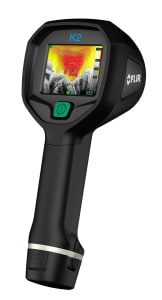
- FLIR K2 Thermal Imaging Firefighting Camera with MSX
- A new level of affordability
- Compact and easy to use
- Robust & reliable
- Multiple image modes
- Multi-spectral dynamic imaging (MSX)
- Multiple firefighting applications
Easy-to-use, even with gloves on
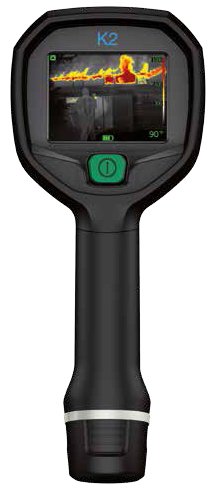
Has an intuitive and simple user interface and can be controlled by 3 large buttons on top of the unit – ideal for a gloved firefighter’s hand.
Clear and Crisp Thermal Images
Maintenance free uncooled microbolometer sensor produces crisp images at 320 x 240 pixels. Thermal images are displayed on a large bright 4” LCD.
Rugged & Reliable
Is designed to meet tough operating conditions. It withstands a drop from 2 meters onto a concrete floor, is water resistant (IP67) and fully operating up to +260°C/+500°F for 5 minutes.
Extremely Affordable Thermal Imaging for Firefighters
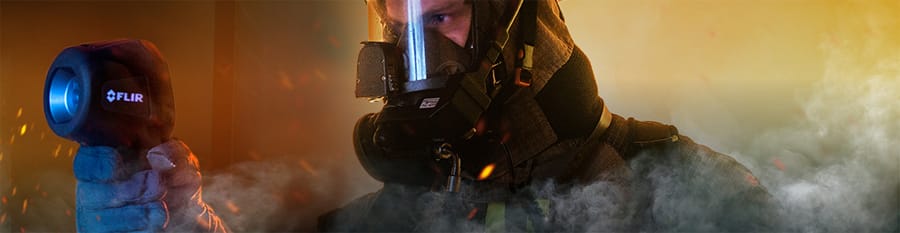
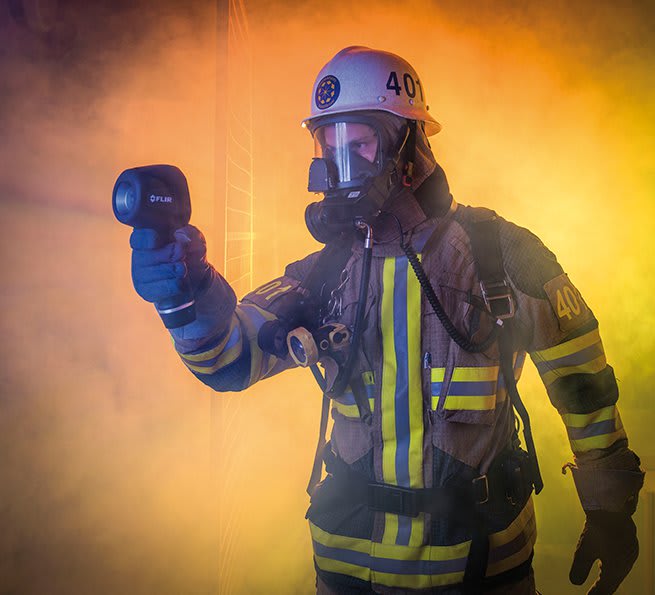
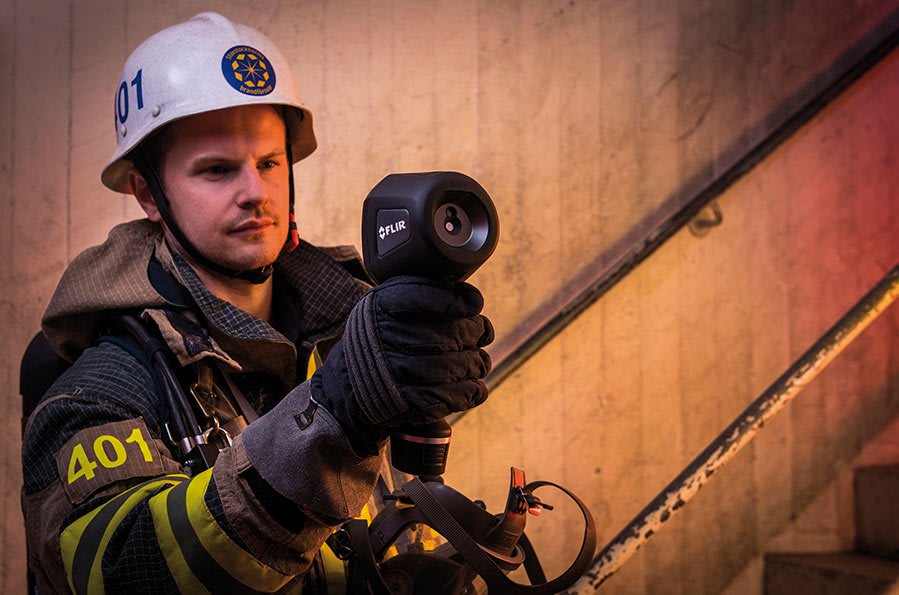
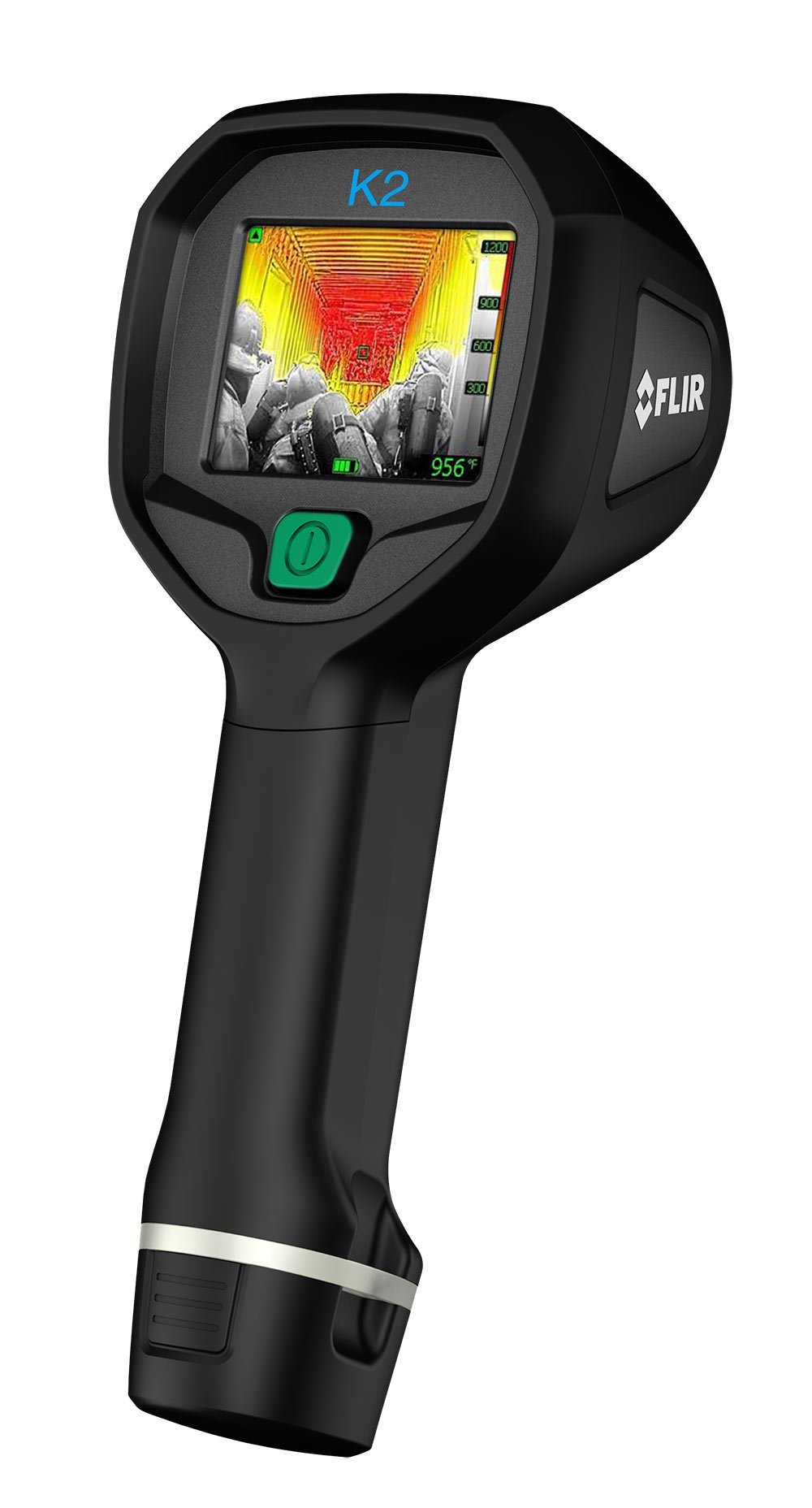
The FLIR K2 is a rugged, reliable, and exceptionally economical thermal imaging camera specially designed for firefighting applications and severe conditions. Producing thermal images at 160 x 120 pixel resolution displayed on a bright 3” screen, the K2 helps firefighters find their way through thick smoke, assess situations with confidence, and expedite decisions
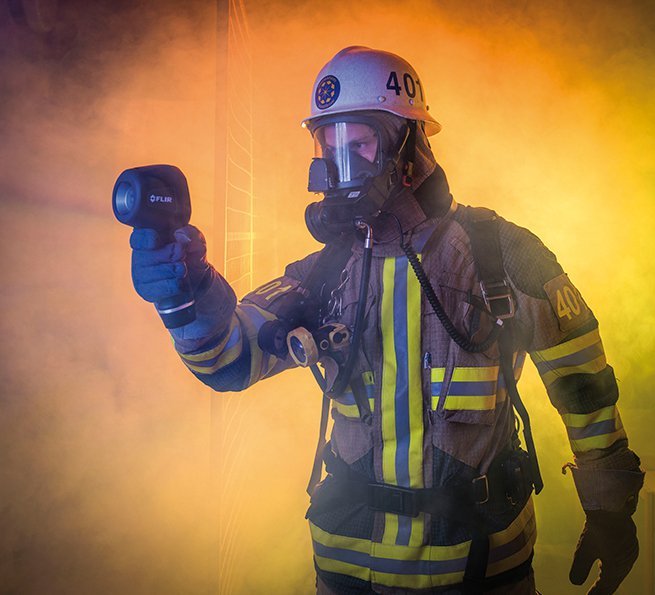
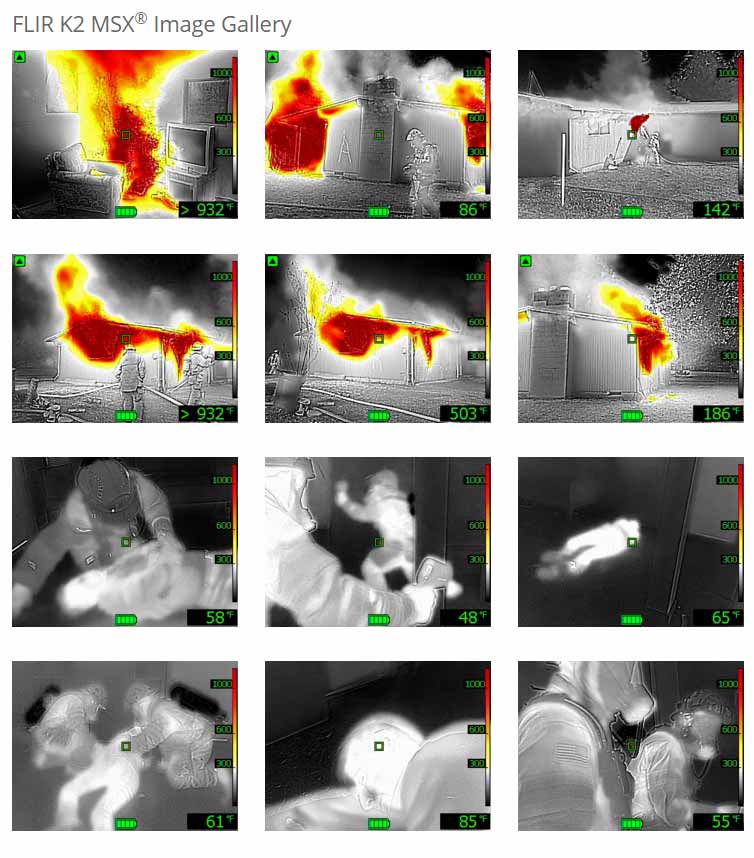
Thermal Imaging Firefighting Camera Sample Application
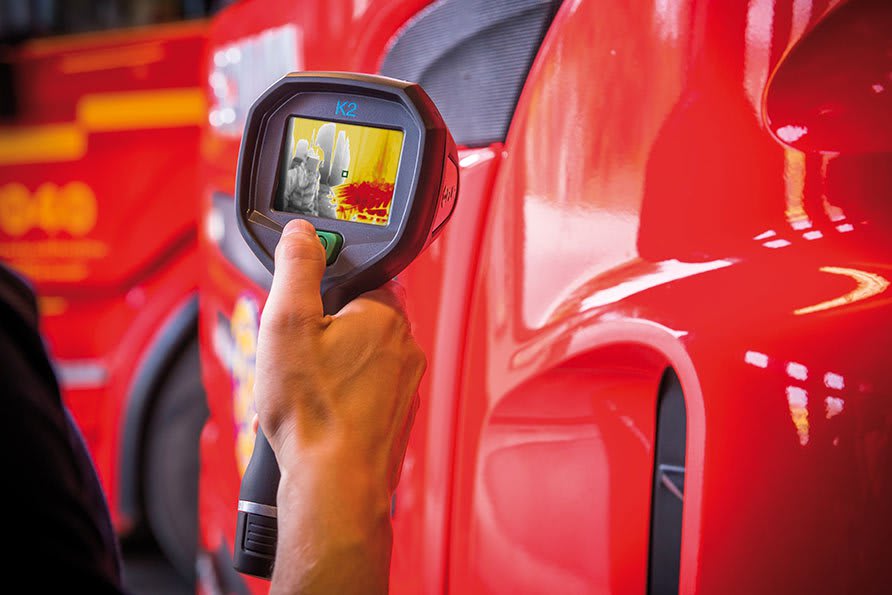
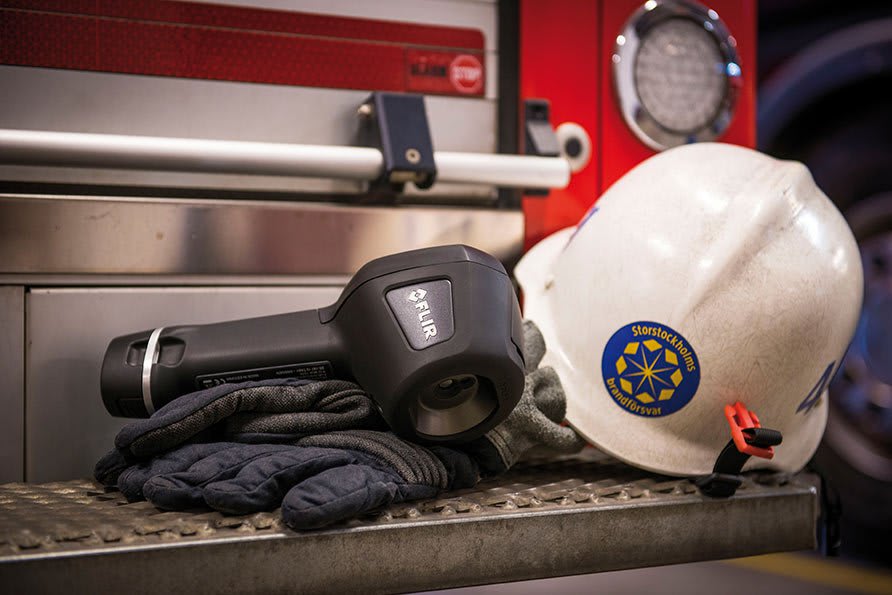

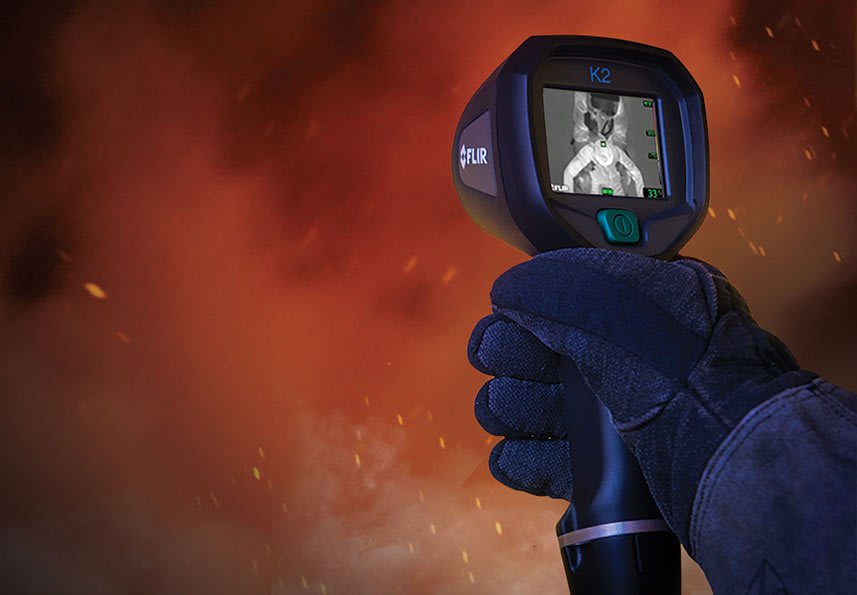
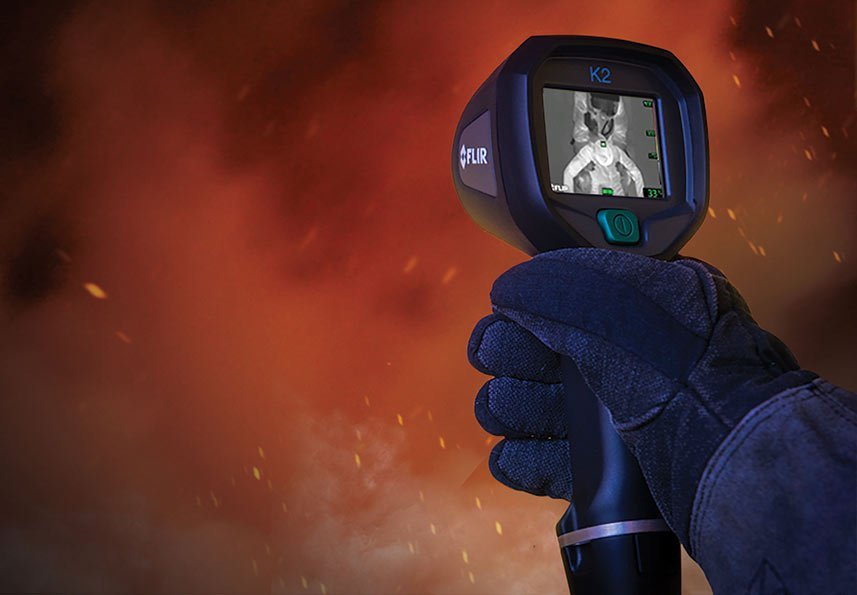
A thermal imaging camera should be easy to operate with a gloved hand.
Operation Modes of the FLIR K2 Firefighter TIC
The FLIR K2 has 7 different modes of operation. To change from the default, you need to connect your TIC to a computer running the free FLIR Tools software.
The different modes are:
Basic Mode
The Basic mode is the default mode of the camera. It is a multipurpose mode for the initial fire attack with life rescuing operation and control of the fire. The camera automatically switches between the high-sensitivity range and the low-sensitivity range, to maintain an optimal infrared image while at the same time maintaining a safe and consistent heat colorization of the fire scene.
- Automatic range.
- Colorization of heat: +150 to +500°C (+302 to +932°F).
- High-sensitivity range: -20 to +150°C (-4 to +302°F)
- Low-sensitivity range: 0 to +500°C (+32 to +932°F)


Black and White Firefighting Mode
The black and white firefighting mode is a standardized firefighting mode based on the Basic mode. It is a multipurpose mode for the initial fire intervention that includes life rescuing operations and control of the fire. It is specifically designed for fire services that do not want to use the heat colorization feature.
The camera automatically switches between the high-sensitivity range and the low-sensitivity range, to maintain an optimal infrared image.
- Automatic range.
- High-sensitivity range: -20 to +150°C (-4 to +302°F)
- Low-sensitivity range: 0 to +500°C (+32 to +932°F)
Fire Mode
The fire mode is similar to the Basic mode, but with a higher-temperature starting point for the heat colorization. It is suitable for fire scenes with higher background temperatures, where there are already a lot of open flames and a high background temperature. The camera automatically switches between the high-sensitivity range and the low-sensitivity range, to maintain an optimal infrared image while at the same time maintaining a safe and consistent heat colorization.
- Automatic range.
- Colorization of heat: +250 to +500°C (+ 482 to +932°F)
- High-sensitivity range: -20 to +150°C (-4 to +302°F)
- Low-sensitivity range: 0 to +500°C (+32 to +932°F)


Search and Rescue Mode
The search and rescue mode is optimized for maintaining high contrast in the infrared image while searching for people in landscapes, buildings, or traffic accident scenes.
- High-sensitivity range only.
- Colorization of heat: +100 to +150°C (+212 to +302°F)
- High-sensitivity range: -20 to +150°C (-4 to +302°F)
Heat Detection Mode
The heat detection mode is optimized for searching hotspots during overhaul after the fire is out—typically to ensure that there is no remaining hidden fire. This mode can also be used to find thermal patterns (e.g., signs of people in car seats after accidents), to ensure that everyone has been found. This mode can also be used to search for people in water and open landscapes.
- High-sensitivity range only.
- Colorization of heat: the 20% highest temperatures in the scene.
- High-sensitivity range: -20 to +150°C (-4 to +302°F)


Cold Detection Mode
The cold detection mode is optimized for searching coldspots in a fire situation—typically to find drafts and air flows that may provide oxygen fuel for the fire.
- High-sensitivity range only.
- Colorization of cold: the 20% lowest temperatures in the scene.
- High-sensitivity range: -20 to +150°C (-4 to +302°F)
Building Analysis Mode
The building analysis mode is suitable for the analysis of buildings and the detection of building-related anomalies. The thermal image can provide information on structural, mechanical, plumbing, and electrical constructions as well as an indication of moisture, wetness, and air infiltration.
In this mode, the camera uses an iron color palette to display the different temperatures, where black, blue, and purple are for the coldest areas, followed by red, orange, and yellow for the mid-range and going to white for the hottest parts. The temperature scale is automatically adjusted to the thermal content of the image.

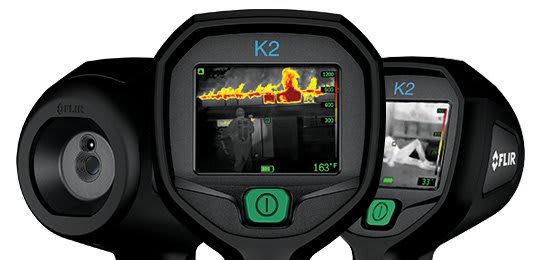
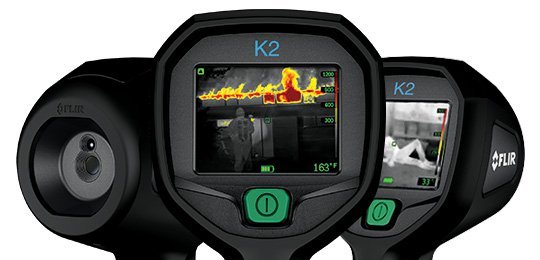
Thermal Imaging Firefighting Camera with MSX Parts
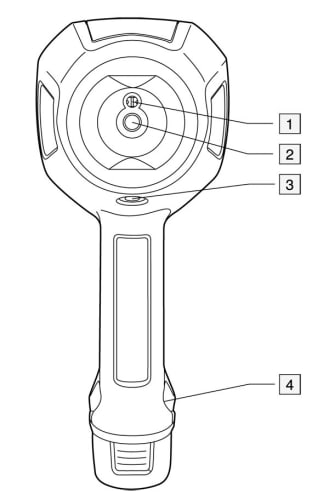
View from the front
- Digital camera lens.
- Infrared lens.
- Tripod mount.
- Attachment point for lanyard strap.
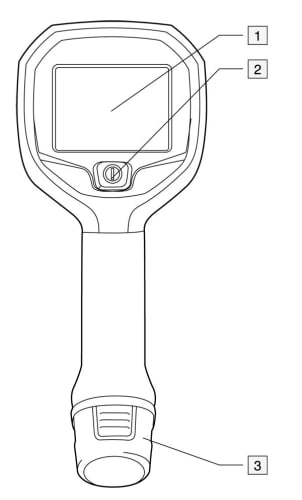
View from the rear
- Camera screen.
- On/off button. This button has three functions:
- Push the on/off button to turn on the camera.
- Push and hold the on/off button for more than 3 seconds but less than 10 seconds to put the camera into the standby mode. The camera then automatically turns off after 6 hours.
- Push and hold the on/off button for more than 10 seconds to turn off the camera.
- Battery.

Who is NFPA?
The mission of the international organization NFPA is to reduce the worldwide burden of fire and other hazards on the quality of life by providing consensus codes and standards, research, training, and education. NFPA is the world’s leading advocate of fire prevention and an authoritative source on public safety. It develops, publishes, and disseminates more than 300 consensus codes and standards intended to minimize the possibility and effects of fire and other risks.
With the NFPA 1801-2013 standard, the organization has outlined requirements for new thermal imagers used by fire service personnel during emergency incident operations. NFPA 1801-2013 was established to provide minimum design, manufacturing, testing, performance, and certification requirements for fire service thermal imaging cameras.
Current Standards for Thermal Imaging Cameras
The NFPA 1801-2103 standard focuses on three main areas, viz. interoperability/usability, image quality, and durability.
Interoperability/usability
TICs from different types or brands should have similar functionality, so that firefighters can use them with minimal training. The idea behind this is that uniformity in the user interface and ease of camera operation should facilitate training and, ultimately, acceptance of thermal imagers by end users. Among other things, this means that TICs should have a green power button and a basic image mode that merely displays a grayscale image with a temperature bar, digital temperature readout and heat-indicating color with a color reference scale. Another requirement is that a TIC should be easy to operate with a gloved hand.

Image quality
For firefighters, it is critical that a thermal imager provides a quality image, so they can quickly visualize a plan of attack, locate hot spots, or even to save lives. NFPA 1801-2013 imaging performance tests pay attention to field of view, contrast, spatial resolution and sensitivity. Another important criterion is image recognition, which means that firefighters should easily recognize things on the thermal image and that the quality of the image is high enough for use on the fire ground.

Durability
Needless to say, that firefighters need to operate in rough environments. That is why the NFPA 1801-2013 has durability requirements to help ensure that TICs are fit for fire ground duty. TIC durability tests conducted include those for ingress protection, heat/flame resistance, impact acceleration and vibration resistance, and corrosion.
Firefighters might also operate in potentially explosive environments. That is why NFPA-compliant TICs must meet ANSI/ISA 12.12.01 Class 1 Division 2 requirements, meaning that TICs are suitable for use within conditions where potentially explosive quantities of dust or vapor may be present.

Thermal Imagers/ Fire First Responder Thermal Imagers Template | |
|---|---|
| Detector Size | 160 x 120 Sensor |
| Image Frequency | 9 Hz |
| IR Digital Zoom | No |
| Thermal Sensitivity | 100 mK (NETD) |
Product General Attributes | |
| Unique Features | 7 different usage modes: TI Basic fire-fighting mode (default) Black-and-white fire-fighting mode Fire mode Search-and-rescue mode Heat detection mode Cold detection mode Building analysis mode Dual Detection ranges: |
| Warranty | 1 YEARS |
| Warranty Details | If you register your camera within 60 days of receipt on the FLIR website, warranty goes from 1 year to: 2 Years on batteries 5 Years on product components 10 Years coverage on the detector – the most vital part of the camera |
| Interfaces I/O | USB |
| Storage | Internal Memory |
| IP Rating | IP67 |
| Product Weight | 1.54 LBS |
| Shipping Weight | 4.5 LBS |
| Data Logging | Yes |
| Calibration Included | None |
| Battery Type | Li-ion |
| Power Supply Voltage | Battery Powered |
| Country of Origin | Estonia |
You must be logged in to post a review.
Manuals/Guides
ManualsSpec SheetsApplication Notes
| Weight | 1.54 lbs |
|---|
Related products


 FLIR K2-Kit Fire and First Res...
 Original price was: $1,790.78.$1,692.90Current price is: $1,692.90.
Our team of knowledgeable professionals is here to help you make informed decisions. Whether you need product recommendations, technical support, or guidance on your purchase, we're just a click away.
Contact Us Now:
📧 sales@nestesinstruments.com
📞 +1 (833) 763-7837
Let us assist you in finding the perfect solution!
Contact Us Now:
📧 sales@nestesinstruments.com
📞 +1 (833) 763-7837
Let us assist you in finding the perfect solution!
Reviews
There are no reviews yet.