No products in the cart.

Sale
Description

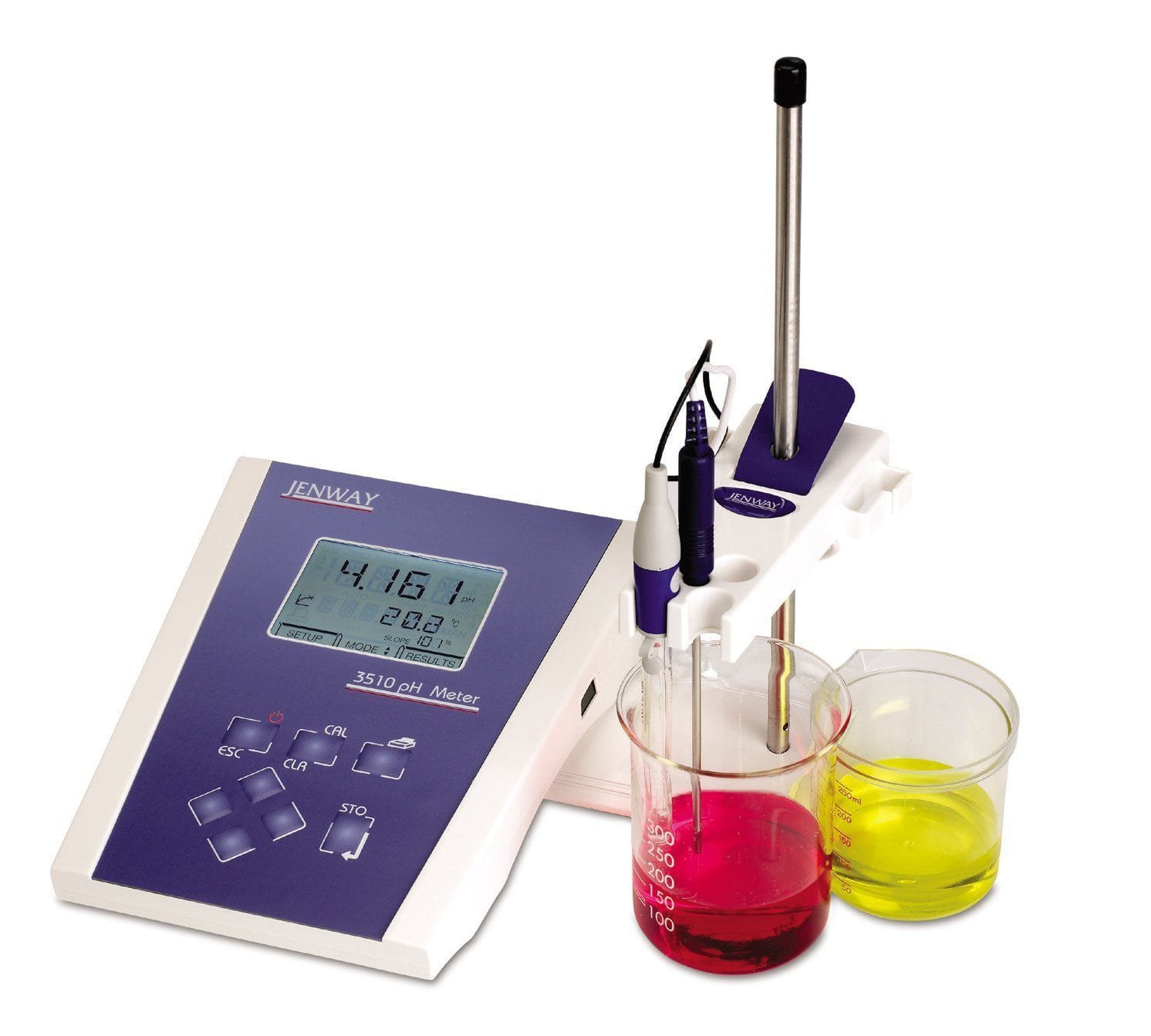
Jenway 352001
- pH resolution to 3 decimal places
- Simultaneous readout of pH and temperature
- 1, 2 or 3 point calibration
- Automatic or manual buffer selection
- Storage of up to 32 results
3510 Bench pH/mV Meter
3510 pHmV meter supplied with glass combination pH electrode (924 005), electrode stand and holder, ATC probe (027 500), BNC shorting plug, pH 4, 7 and 10 buffers 230v.
The 3510 is a versatile, simple to use pH, mV and temperature meter that is ideal for routine analysis. With up to three decimal place resolution and a choice of up to three calibration points the 3510 provides the user with added flexibility where future demands for enhanced performance may be required. A choice of pH calibration buffers to DIN, JIS and NIST standards can be used for automatic calibration, as well as manually entered buffer values. The pH measurement meter also has the ability to store up to 32 results.
Display
1. Symbol – displayed during set-up of instrument parameters.
2. Primary display – 4½ digit. Provides direct readout in pH and millivolts of samples and standards.
3. Mode annunciators – shows selected measurement mode; pH, mV (Absolute and Relative).
4. Calibration point – shows 1, 2 or 3 point symbol depending on level of calibration selected by the user.
5. Buffer selection – indicates whether the instrument is using manually entered or automatic selection buffers. Will show which type of buffer is being used.
6. Endpoint symbol – this symbol is displayed when the pH changes by less than 0.005pH (0.2mV) over a five second period. Once an endpoint has been detected the reading must change by more than 0.005pH (0.2mV) to clear the endpoint symbol.
7. Secondary display – 6 digit display. Provides direct readout of automatic or manual temperature. Scrolls and displays selected parameter information in set-up mode.
8. Mode annunciators – indicates temperature in °C or °F and whether the measurements are manually or automatically temperature compensated.
9. Status display – 2½ digit. Provides information relating to electrode slope value, mV Eo value at calibration and memory result number.
10. Mode tags – Each mode tag is highlighted when selected; SETUP, MODE or RESULTS.


Keypad
1. ESC used to switch the instrument on and to place into standby mode (only if power supply lead remains connected to the instrument). Also used to escape/exit a mode.
2. CAL / CLR used to select and perform a calibration sequence. This key is also used to clear readings from Memory. Used to select Abs/Rel mV in mV mode.
3. Print key used to initiate a print.
4. Up Arrow used for adjustment during set up, to scroll results and to toggle between mV and pH modes.
5. Down Arrow used for adjustment during set up, to scroll results and to toggle between mV and pH modes.
6. Left Arrow used for adjustment during set up and to move between mode tags.
7. Right Arrow used for adjustment during set up and to move between mode tags.
8. STO used to accept an entered value in set-up mode and to instigate a stored reading. This key can also be used as a CAL key during calibration.
Rear panel layout
1. Ref Socket 2mm pin socket. Connection socket for separate reference electrode. When performing measurements with some pH and ion selective electrodes a separate reference electrode is needed.
2. pH Socket BNC type socket which allows combination pH or redox electrodes to be used.
3. Temp Socket 8 pin mini-DIN socket. This allows the Automatic Temperature Compensation (ATC) probe (027 500) to be connected.
4. Analog Out 2 x 4mm sockets. Analogue output (buffered electrode potential).
5. Output Socket 9 way socket for RS232 connection.
6. Power In AC 9V I/P socket. 2.1 x 5.5mm socket allowing the power supply to be connected to the instrument.

Product General Attributes | |
|---|---|
| Interfaces I/O | RS-232 |
You must be logged in to post a review.
Manuals/Guides
ManualsSpec Sheets
Related products
Sale

Testo 417 – Digital 4 inch Vane Anemometer with App Connection (Part # 0563 0417)
Original price was: $495.00.$420.75Current price is: $420.75. Add to cart
Sale

TPI 556C1 Digital Vane Air Velocity
Original price was: $219.94.$202.34Current price is: $202.34. Add to cartSale
Myron PT2 Myron L UltraPen – pH & Temperature
Original price was: $284.90.$236.01Current price is: $236.01. Add to cartSale
Kestrel 0830 – 3000 Wind Meter
Original price was: $232.10.$185.90Current price is: $185.90. Add to cart Jenway 352001 – 3510 Ben...
 Original price was: $1,409.10.$1,380.91Current price is: $1,380.91.
Our team of knowledgeable professionals is here to help you make informed decisions. Whether you need product recommendations, technical support, or guidance on your purchase, we're just a click away.
Contact Us Now:
📧 sales@nestesinstruments.com
📞 +1 (833) 763-7837
Let us assist you in finding the perfect solution!
Contact Us Now:
📧 sales@nestesinstruments.com
📞 +1 (833) 763-7837
Let us assist you in finding the perfect solution!
Reviews
There are no reviews yet.