No products in the cart.


Description
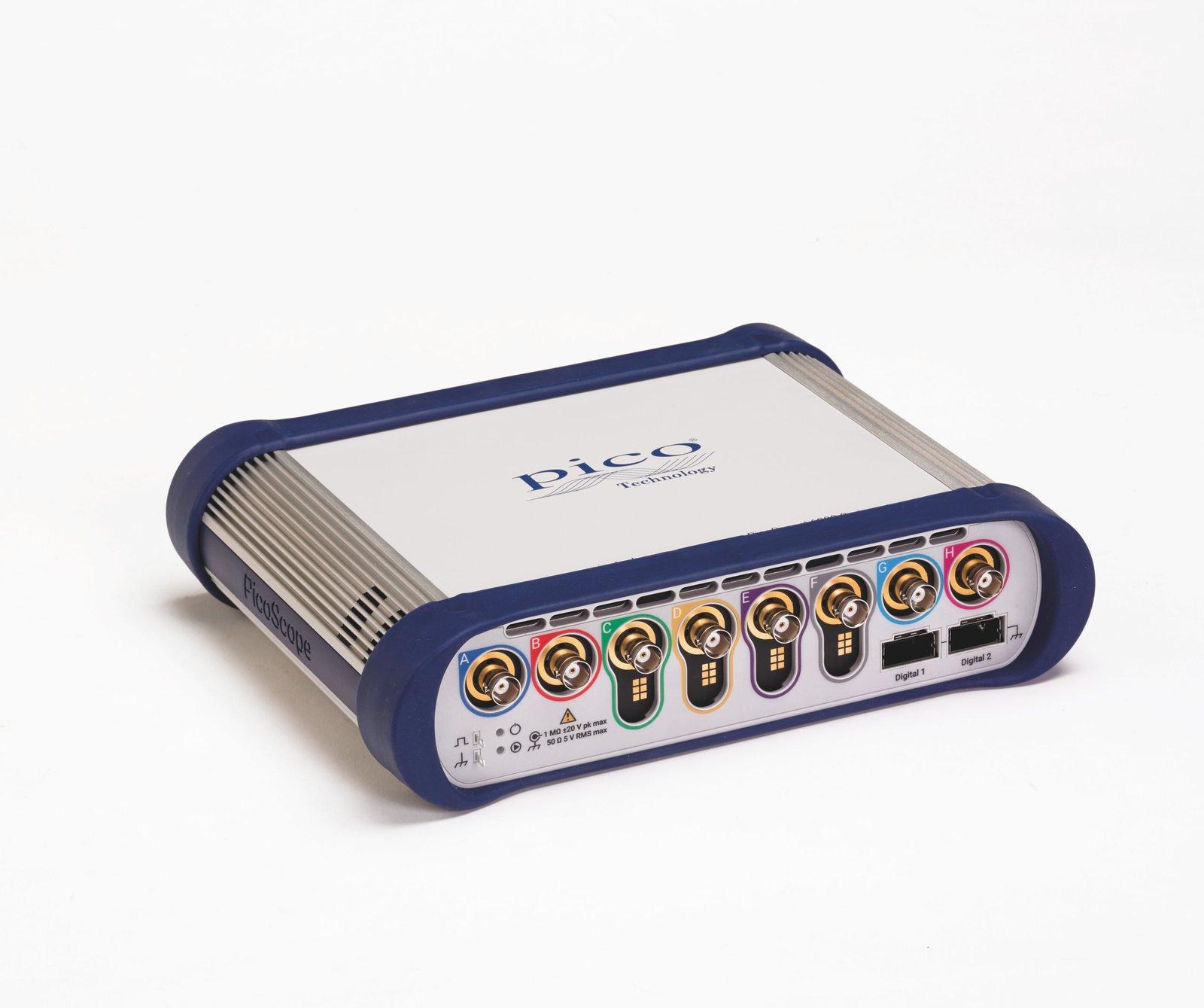
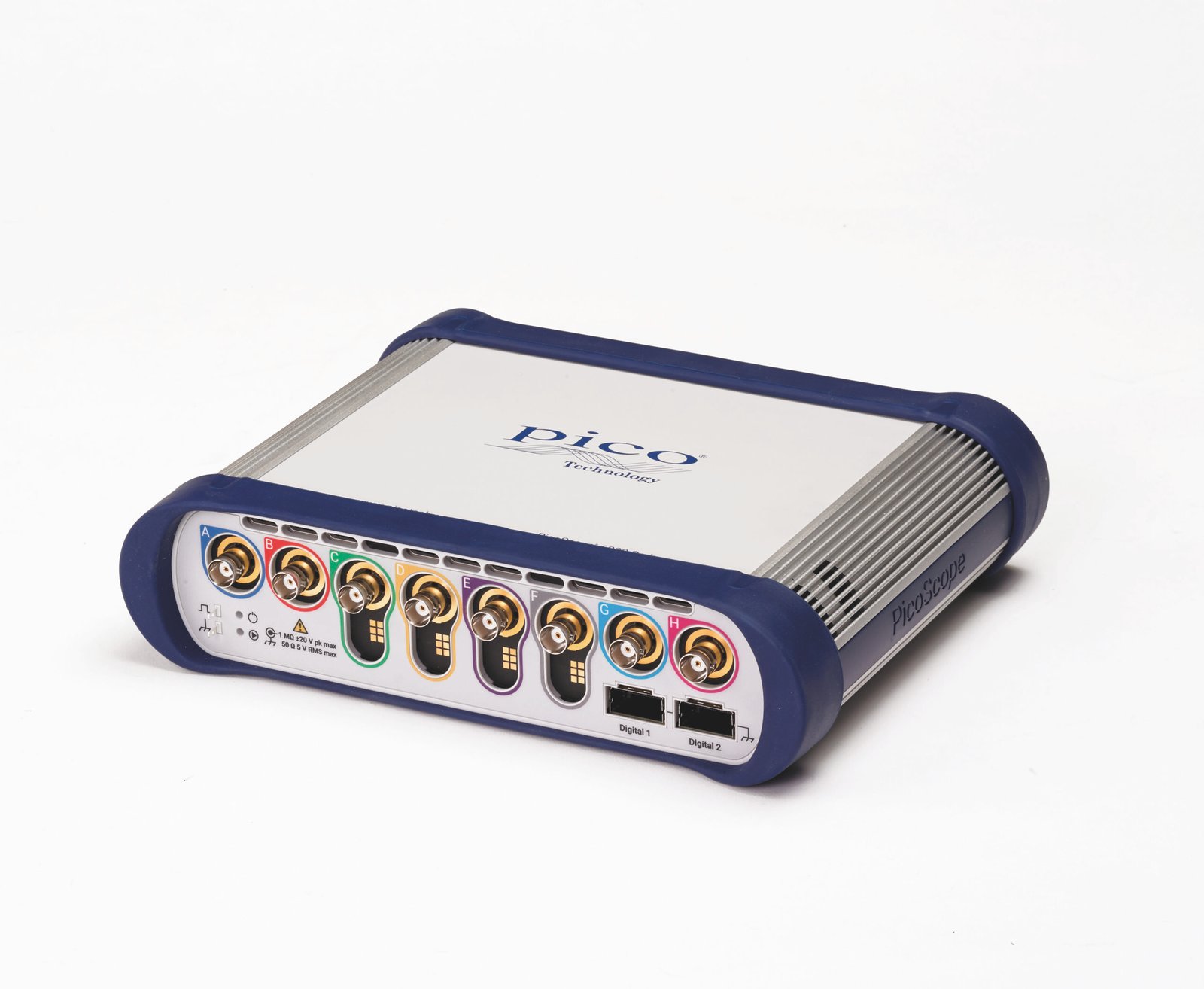
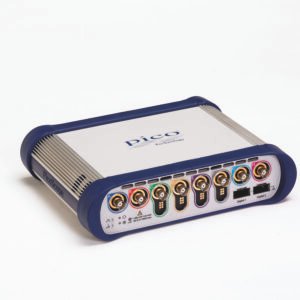
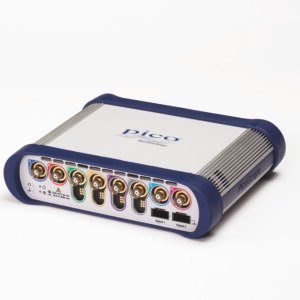
Pico Scope 6000E Series Deep-memory, High-performance Oscilloscopes and MSOs

Scope Oscilloscope 6824E 500 MHz, 8 channel, FlexRes
The PicoScope 6000E Series fixed-resolution and FlexRes oscilloscopes provide 8 to 12 bits of vertical resolution, with 500 MHz bandwidth and 5 GS/s sampling rate. Eight analog channels have the timing and amplitude resolution you need to reveal signal integrity issues such as glitches, runts, dropouts, noise, distortion and ringing.
Typical applications
These oscilloscopes are ideal for design engineers working with high-performance embedded systems, signal processing, power electronics, mechatronics and automotive designs, and for researchers and scientists working on multi-channel high-performance experiments in physics labs, particle accelerators and similar facilities.
Best-in-class bandwidth, sampling rate and memory depth
With 500 MHz analog bandwidth complemented by a real-time sampling rate of 5 GS/s, the PicoScope 6000E Series scopes can display single-shot pulses with 200 ps time resolution.
The PicoScope 6000E Series gives you the deepest capture memory—up to 4 GS in total—available as standard on any oscilloscope at any price. This ultra-deep memory allows the oscilloscope to capture 200 ms waveforms at its maximum sampling rate of 5 GS/s.
The SuperSpeed USB 3.0 interface and hardware acceleration ensure that the display is smooth and responsive even with long captures.
The PicoScope 6000E Series gives you the waveform memory, resolution and analysis tools that you need to perform stringent testing of today’s high-performance embedded computers and next-generation embedded system designs.

Channel versus sampling rate
In 8-bit mode, the 5 GS/s capability is available on up to two channels at once and 2.5 GS/s sampling is available on up to four channels at once, in the channel combinations shown below. Sampling rates of 1.25 GS/s and lower are available on all eight channels at once. For sampling rates in 10 and 12-bit modes, see the technical specifications.

Power, portability and performance
Conventional eight-channel benchtop mixed-signal oscilloscopes occupy too much space on the bench and are too costly for most engineers working on next-generation designs. PicoScope 6000E Series oscilloscopes are small and portable while offering the high-performance specifications required by engineers in the lab or on the move.
These oscilloscopes offer 8 analog channels, plus an optional 8 or 16 digital channels with the plug-in 8-channel TA369 MSO pods. The flexible high -resolution display options enable you to view and analyze each signal in detail.
Supported by the PicoScope 6 software, these devices offer an ideal, cost-effective package for many applications, including design, research, test, education, service, and repair. PicoScope 6 is included in the cost of your scope, available for free download, with free updates, and can be installed on as many PCs as you want, including to view/analyze data off-line without the scope.

What is FlexRes?
Pico FlexRes flexible-resolution oscilloscopes allow you to reconfigure the scope hardware to optimize either the sampling rate or the resolution.
This means you can reconfigure the hardware to be either a fast (5 GS/s) 8-bit oscilloscope for looking at digital signals or a high-resolution 12-bit oscilloscope for audio work and other analog applications.
Whether you’re capturing and decoding fast digital signals or looking for distortion in sensitive analog signals, FlexRes oscilloscopes are the answer.
FlexRes is available on the PicoScope 6824E.
Resolution enhancement—a digital signal processing technique built into PicoScope 6— can further increase the effective vertical resolution of the scope to 16 bits.

FlexRes – how we do it
Most digital oscilloscopes gain their high sampling rates by interleaving multiple 8-bit ADCs. This interleaving process introduces errors that always make the dynamic performance worse than that of the individual ADC cores.

The FlexRes architecture employs multiple high-resolution ADCs at the input channels in different time-interleaved and parallel combinations to optimize either the sampling rate to 5 GS/s at 8 bits, the resolution to 12 bits at 1.25 GS/s, or other combinations in between.
The diagram shows one bank of four channels; the PicoScope 6824E has two banks.
Coupled with high signal-to-noise ratio amplifiers and a low- noise system architecture, FlexRes technology can capture and display signals up to 500 MHz with a high sampling rate, or lower-speed signals with 16 times more resolution than typical 8-bit oscilloscopes.
The PicoScope 6 software lets you choose between setting the resolution manually and leaving the scope in auto resolution mode, where the optimal resolution is used for the chosen settings.
Mixed signal option
Most benchtop mixed-signal oscilloscopes give you a maximum of four analog channels and 16 digital inputs. When fitted with the optional 8-channel TA369 MSO pods, the PicoScope 6000E Series adds up to 16 high-performance digital channels to its eight analog channels, enabling you to accurately time-correlate analog and digital channels. Digital channel bandwidth is 500 MHz, equivalent to 1 Gb/s, and the input capacitance of only 3.5 pF minimizes loading on the device under test.

Digital channels, captured from either parallel or multiple serial buses, may be grouped and displayed as a bus, with each bus value displayed in hex, binary or decimal, or as a level (for DAC testing). You can set advanced triggers across the analog and digital channels.
The digital inputs also bring extra power to the serial decoding feature. You can decode serial data on all analog and digital channels simultaneously, giving you up to 24 channels of data – for example, decoding multiple SPI, I²C, CAN bus, LIN bus and FlexRay signals all at the same time!
High resolution for low-level signals
With its 12-bit resolution, the PicoScope 6824E can display low-level signals at high zoom factors. This allows you to view and measure features such as noise and ripple superimposed on larger DC or low-frequency voltages.

Additionally, you can use the lowpass filtering controls on each channel independently, to hide noise and reveal the underlying signal.
Advanced display
PicoScope 6 software dedicates the majority of the display area to the waveform, ensuring that the maximum amount of data is visible at all times. The size of the display is only limited by the size of your computer’s monitor, so even with a laptop, the viewing area is much bigger, with much higher resolution, than that of a benchtop scope.

With such a large display area available, you can create a customizable split-screen display and view multiple channels or different views of the same signal at the same time – the software can even show multiple oscilloscope and spectrum analyzer views at once. Each view has separate zoom, pan and filter settings, for ultimate flexibility.
You can control the PicoScope software using a mouse, a touchscreen or customizable keyboard shortcuts.
SuperSpeed USB 3.0 connection
PicoScope 6000E Series oscilloscopes feature a USB 3.0 connection, providing lightning-fast saving of waveforms while retaining compatibility with older USB standards.

PicoSDK ® supports continuous streaming to the host computer at rates of over 300 MS/s.
The USB connection not only allows high-speed data acquisition and transfer, but also makes printing, copying, saving and emailing your data from the field quick and easy.
PicoScope 6 custom colors
In PicoScope 6, you can customize the color scheme and line thicknesses. Display elements you can adjust in this way include the channel traces, background color and grid lines.

Signal fidelity
Careful front-end design and shielding reduces noise, crosstalk and harmonic distortion. PicoScope 6000E Series oscilloscopes exhibit a dynamic performance of up to 60 dB SFDR.

With PicoScope 6, when you probe a circuit, you can trust in the waveform you see on the screen.
High-end features as standard
Buying a PicoScope is not like making a purchase from other oscilloscope companies, where optional extras considerably increase the price. With our scopes, high-end features such as serial decoding, mask limit testing, advanced math channels, segmented memory, hardware-based time-stamping and a signal generator are all included in the price.

To protect your investment, both the PC software and firmware inside the scope can be updated. Pico Technology has a long history of providing new features for free through software downloads. We deliver on our promises of future enhancements year after year. Users of our products reward us by becoming lifelong customers and frequently recommending us to their colleagues.
Ultra-deep memory
PicoScope 6000E Series oscilloscopes have waveform capture memories of 2 or 4 gigasamples – many times larger than competing scopes. Deep memory enables the capture of long-duration waveforms at maximum sampling speed. In fact, the PicoScope 6000E Series can capture waveforms 200 ms long with 200 ps resolution. In contrast, the same 200 ms waveform captured by an oscilloscope with a 10 mega sample memory would have just 20 ns resolution. The scope automatically shares the capture memory between the analog channels and MSO ports you have enabled.

Deep memory is invaluable when you need to capture fast serial data with long gaps between packets, or nanosecond laser pulses spaced milliseconds apart, for example. It can be useful in other ways too: PicoScope lets you divide the capture memory into a number of segments, up to 10 000. You can set up a trigger condition to store a separate capture in each segment, with as little as 300 ns dead time between captures. Once you have acquired the data, you can step through the memory one segment at a time until you find the event you are looking for.
Powerful tools are included to allow you to manage and examine all of this data. As well as functions such as mask limit testing and color persistence mode, the PicoScope 6 software enables you to zoom into your waveform up to 100 million times. The Zoom Overview window allows you to easily control the size and location of the zoom area. Other tools, such as the waveform buffer, serial decoding and hardware acceleration work with the deep memory, making the PicoScope 6000E Series some of the most powerful oscilloscopes on the market.
Persistence mode
PicoScope’s persistence mode options allow you to see old and new data superimposed, making it easy to spot glitches and dropouts and estimate their relative frequency – useful for displaying and interpreting complex analog signals such as video waveforms and amplitude modulated signals. Color-coding and intensity-grading show which areas are stable and which are intermittent. Choose between Analog Intensity, Digital Color and Fast Display modes or create your own custom setup.

An important specification to understand when evaluating oscilloscope performance, especially in persistence mode, is the waveform update rate, which is expressed as waveforms per second. While the sampling rate indicates how frequently the oscilloscope samples the input signal within one waveform or cycle, the waveform capture rate refers to how quickly an oscilloscope acquires waveforms.
Oscilloscopes with high waveform capture rates provide better visual insight into signal behavior and dramatically increase the probability that the oscilloscope will quickly capture transient anomalies such as jitter, runt pulses and glitches – that you may not even know exist.
The PicoScope 6000E Series’ HAL4 hardware acceleration means that, in fast persistence mode, update rates of up to 300 000 waveforms per second are achievable.
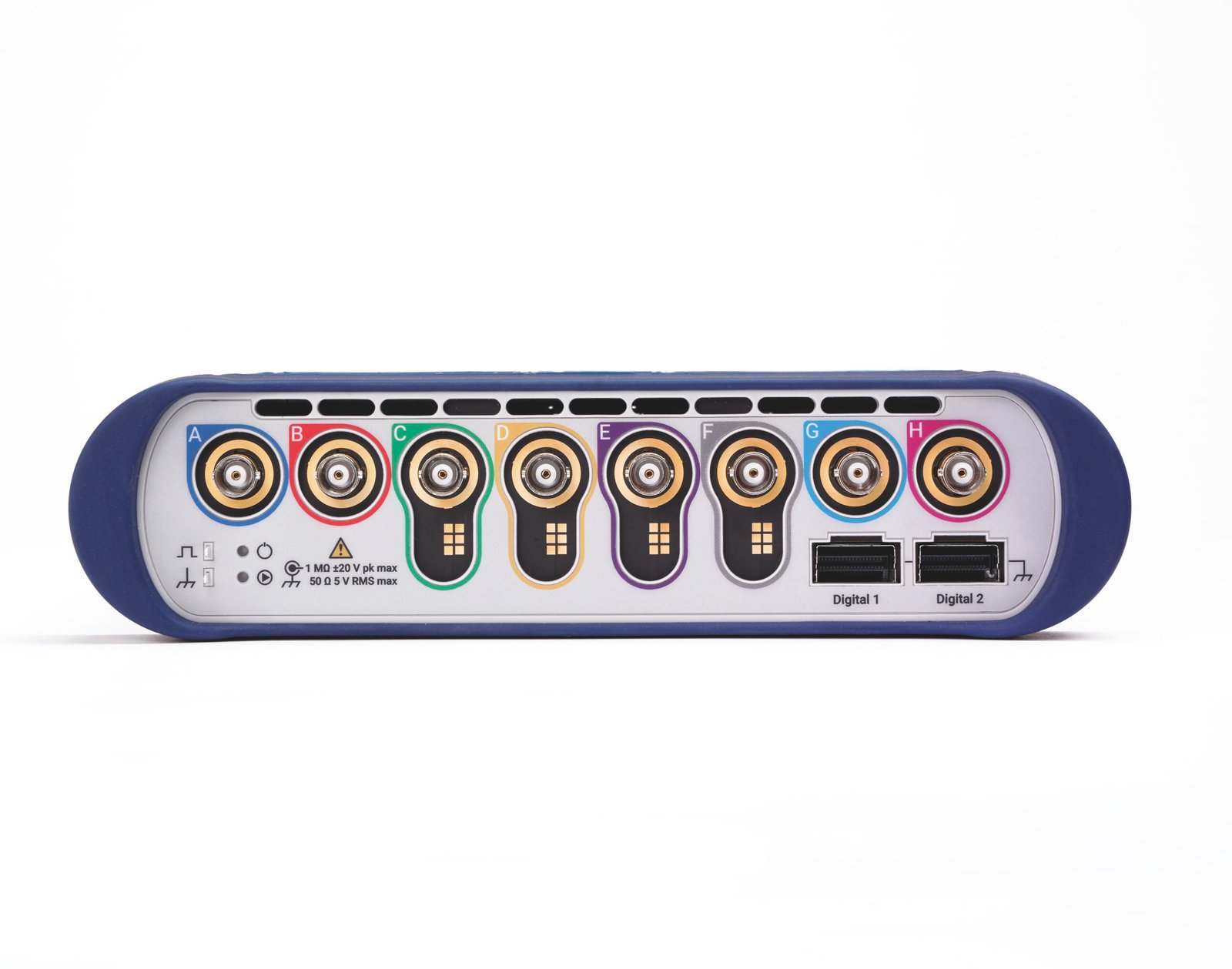
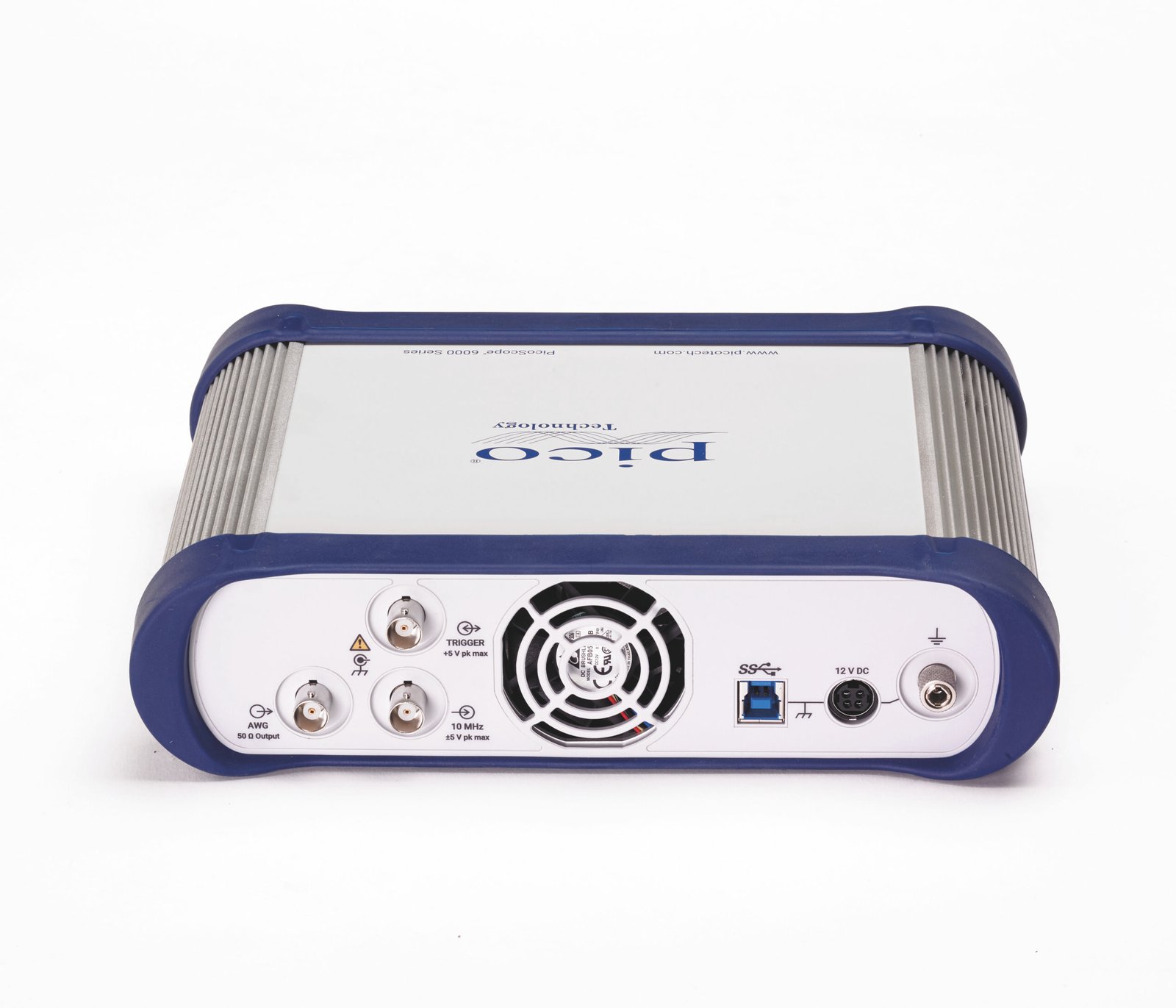
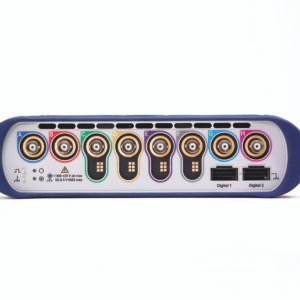
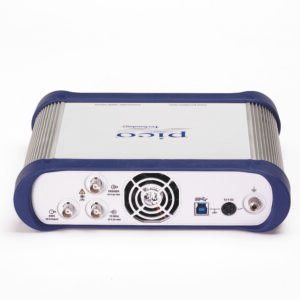
PicoScope 6000E Series inputs, outputs and indicators

PicoScope 6 software
The display can be as simple or as advanced as you need. Begin with a single view of one channel, and then expand the display to include any number of live channels, math channels and reference waveforms.

Product General Attributes | |
|---|---|
| HTS/Schedule B Number | 90302000 |
| Country of Origin | United Kingdom |
You must be logged in to post a review.
Manuals/Guides
Spec Sheets
Related products


Sale
Rigol DHO804 – Digital Oscilloscope (4 Channels / 70MHz)
Original price was: $482.90.$410.46Current price is: $410.46. Add to cart

 Pico 6824E Scope 6824E Oscillo...
 $17,231.50
Our team of knowledgeable professionals is here to help you make informed decisions. Whether you need product recommendations, technical support, or guidance on your purchase, we're just a click away.
Contact Us Now:
📧 sales@nestesinstruments.com
📞 +1 (833) 763-7837
Let us assist you in finding the perfect solution!
Contact Us Now:
📧 sales@nestesinstruments.com
📞 +1 (833) 763-7837
Let us assist you in finding the perfect solution!
Reviews
There are no reviews yet.